Lymphatic Health for Women Who Spend a Lot of Time in "Go Mode"
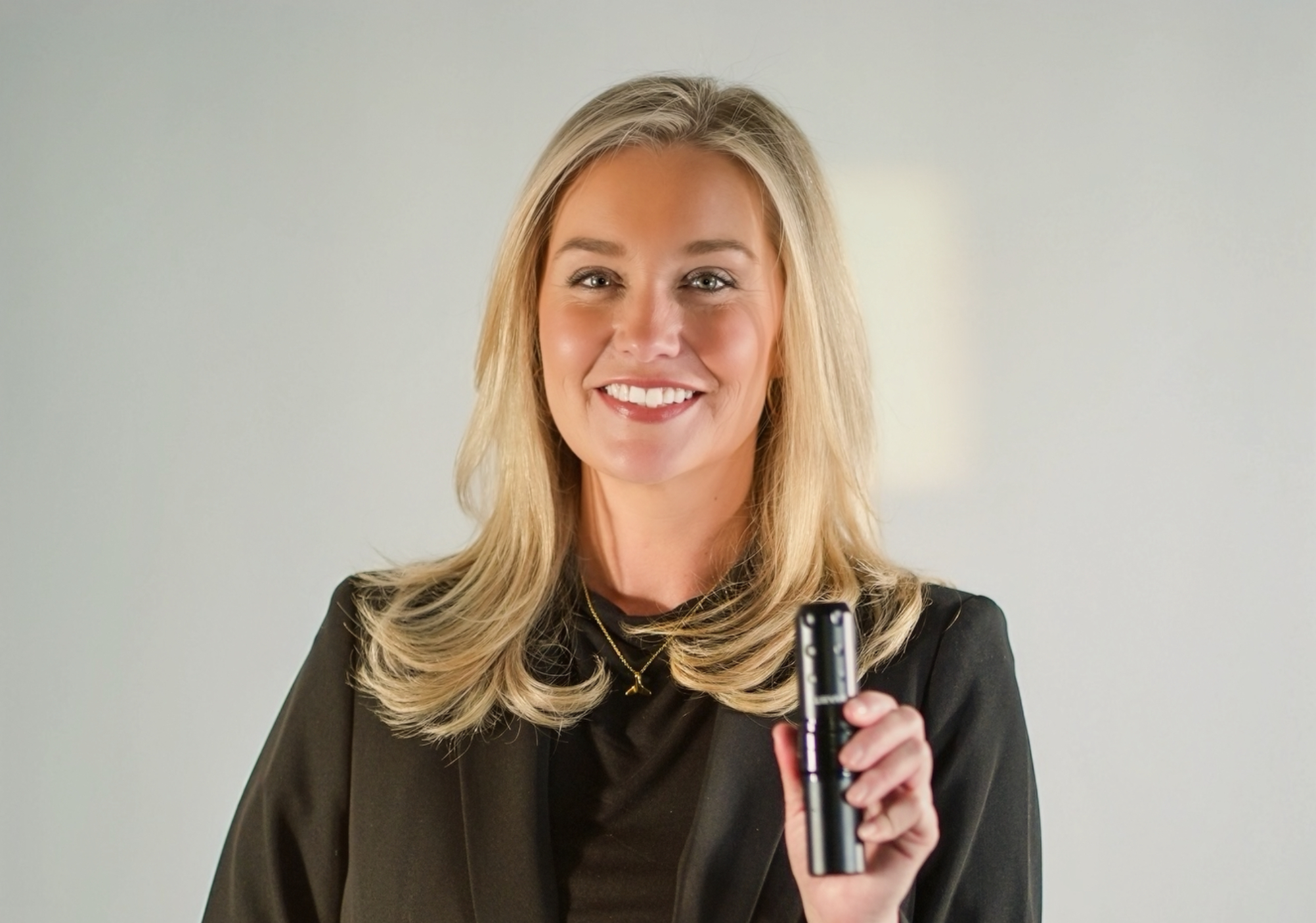

There is a particular kind of woman we see quite a bit at node & needle. She's busy, successful, usually taking care of several people in addition to herself, and genuinely interested in her health. She probably exercises. She drinks plenty of water. She pays attention to what she eats. She may have an Oura ring or an Apple Watch telling her how she slept. She knows what HRV is. She has supplements in the cabinet and a handful of podcasts in her queue that she swears she'll get to eventually.
She's not ignoring her health. Quite the opposite. But she'll come in and tell us that she still feels puffy some days. Her rings are tight in the morning, or her body just feels heavier than she'd like. She doesn't sleep as well when work gets crazy. She feels tired but has a hard time slowing down. Sometimes she'll tell me that she went on vacation and it took several days before she actually felt like she was on vacation.
None of those things, by themselves, mean there's something wrong with her lymphatic system. I want to say that very clearly because there is an incredible amount of content online right now suggesting that almost every vague symptom is evidence of "stagnant lymph." That's not how the body works. What it does tell me is that we should probably be having a bigger conversation about recovery.

I spent years working in mental health in addition to more than two decades working with the body, and one of the things that has always fascinated me is how good we can become at functioning under a tremendous amount of demand. We tend to think of stress as feeling stressed, but our bodies are responding to demand whether or not we experience it that way. A hard workout is a demand. So is a deadline. So is inadequate sleep, an argument with your teenager, traveling for work, or spending an entire day bouncing between meetings without getting up from your desk.
None of that is inherently bad. Our bodies are designed to respond to changing demands. The piece I think we sometimes miss is that recovery is also part of that cycle. And this is where the lymphatic system becomes interesting to me. The lymphatic system is responsible for important aspects of fluid balance and immune function. Lymphatic vessels have their own intrinsic contractions, and lymph movement is also supported by things we're doing every day, including skeletal muscle movement and the pressure changes associated with breathing. It is an active, dynamic system. It isn't a collection of clogged pipes waiting for someone to "flush toxins" out of them.
That's why, when someone asks me what she can do for her lymphatic health, the answer isn't necessarily "book more lymphatic drainage." Sometimes the answer is walk. Move your body throughout the day. Breathe in a way that actually allows your diaphragm to move. Get enough sleep. Stay hydrated. Stop sitting at your computer for four hours without moving.
And yes, sometimes the answer may also include manual lymphatic drainage.

What I've become increasingly interested in over the years is what happens when we stop thinking about lymphatic work as something that happens only to the lymphatic system.
That thinking is part of what eventually led me to develop NeuroSomatic Lymphatic Drainage™. My background in somatic mental health work and nervous system regulation naturally followed me into the treatment room. I couldn't really separate the two anymore, and I wasn't sure I wanted to.
NSLD combines advanced lymphatic techniques with practices intended to support rest and nervous system regulation. A session may include breathwork, gentle craniosacral techniques, vagal-supportive work and rhythmic manual techniques alongside lymphatic drainage. The goal isn't to "reset your nervous system" in a session, and I would be very skeptical of anyone promising you that. It's much simpler than that. We're creating a period of time in which we're supporting lymphatic movement while also reducing the amount being asked of you.
For a woman constantly running on overdrive, that distinction is significant.
I think wellness has become exhausting for a lot of women. We're being asked to track more, optimize more, wake up earlier, eat better, exercise smarter, meditate every day, improve our sleep score and somehow make time for all of this while continuing to do everything we were already doing.
Eventually, self-care starts looking suspiciously like another job.

I don't want lymphatic care at node & needle to feel that way.
When you come in for a session, there's nothing for you to achieve. You don't need to be good at relaxing. You don't need to understand your lymphatic system before you arrive. You certainly don't need to follow a complicated protocol at home in order to be a "good" client. We can talk about what's going on in your body, what you've been noticing and what you're hoping to get from the work, and we'll go from there.
That also means I'm not going to tell every woman that she needs the same lymphatic treatment or the same frequency of care.
A healthy woman who enjoys lymphatic drainage as part of her wellness routine is very different from a patient recovering from a mastectomy. Someone living with lipedema has different considerations than someone who wants to feel less puffy before an event. A woman recovering from cosmetic surgery needs a practitioner who understands the procedure, healing timelines, complications and when manual therapy is and isn't appropriate.
We work across all of those populations at node & needle, but we don't pretend they're interchangeable. That's actually one of the things I'm most particular about. For our wellness clients, I think the opportunity is much simpler. Lymphatic care can be one part of a larger relationship with your body that includes movement, sleep, breathing, good nutrition, hydration and actual recovery. Not performative recovery. Not sitting on the couch answering emails while Netflix plays in the background. The kind where, for a little while, nothing is required of you.
If you're someone who spends most of her life in go mode, that can feel surprisingly unfamiliar. It may also be why some women come in initially because they're curious about lymphatic drainage and end up returning because they value the experience of slowing down just as much as the treatment itself.
You don't need to wait until you're burned out to decide that recovery matters. You also don't need a diagnosis or a problem that needs to be fixed.
Sometimes taking care of a body that does a lot for you is reason enough.
That's a big part of what we're building at node & needle: thoughtful, evidence-informed lymphatic care that considers the person attached to the lymphatic system.
For the women who are very good at doing, we're also creating a place to practice something else.
Less Doing. More Being.


Comments